
Dentures themselves don’t change the shape of your face. A well-fitting denture supports your lips and cheeks much as natural teeth did. The changes people notice come from two things: the jaw slowly shrinks after teeth are lost, and denture teeth wear down over the years. Both let the lower face close up a little, which can give a sunken or older look.
Here’s why it happens, the signs your denture no longer supports your face, and what can be done about it.
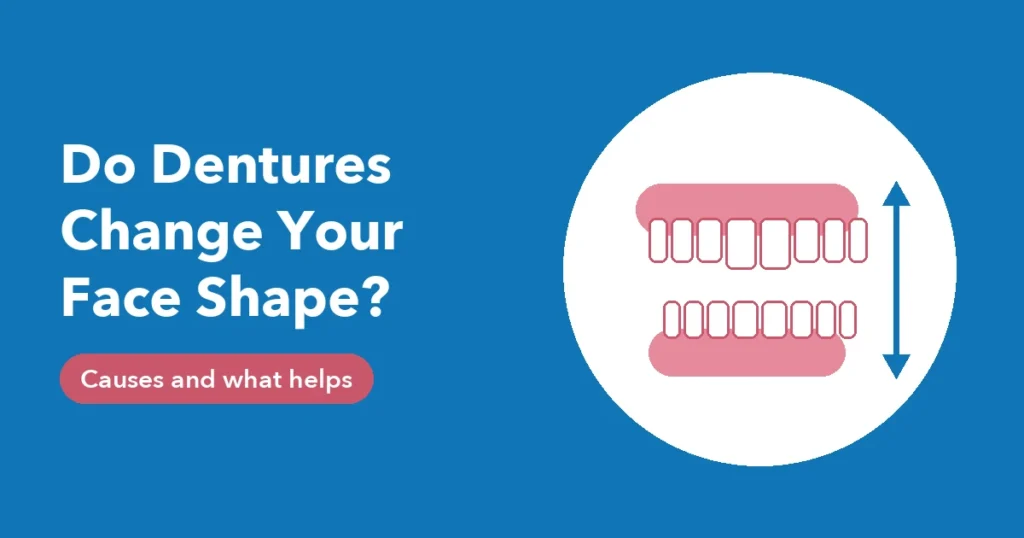
Why the face changes after tooth loss
Natural tooth roots keep the jawbone around them active. Once teeth are gone, that bone slowly shrinks. This is called ridge resorption. It’s usually fastest in the first months after extractions and then continues slowly for years. The lower jaw usually shrinks more than the upper.
As the ridge shrinks, a denture made for your old gum shape sits lower, moves more, and gives less support to your lips and cheeks.
How worn or loose dentures change your look
- Worn teeth lower your bite. As biting surfaces flatten, your jaws close further. The lower face looks shorter and the chin moves closer to the nose.
- Lips look thinner and can turn inward.
- Deeper lines form from the nose to the corners of the mouth.
- Sore, cracked mouth corners can appear when the bite closes too far and saliva collects there.
- Cheeks look hollow if the denture sits too low.
Signs your denture no longer supports your face
- Your face looks shorter or more sunken in photos than it used to
- The teeth are visibly worn or flat
- The denture is loose or rocks (here’s why dentures feel loose)
- Sore or cracked corners of the mouth
- Jaw pain or headaches (see can dentures cause headaches or ear pain?)
- The denture is many years old (see how long dentures last)
What helps
| Problem | What helps | Who does it |
|---|---|---|
| Loose fit from gum changes | A reline or rebase | Your dentist |
| Teeth worn flat | New teeth, or a new denture | Your dentist |
| A broken or missing front tooth | Reattach or replace the tooth | Total Denture Repair: $120 to reattach, free quote for a new tooth |
| A cracked base that sits unevenly | Crack repair | Total Denture Repair: from $150 |
| A lot of bone loss | A new denture, or implant-supported options | Your dentist |
Do dentures stop bone loss?
No. A regular denture rests on the gums and doesn’t stop the bone underneath from shrinking. Dental implants place posts in the bone, and implant-supported dentures are often suggested partly for that reason. Ask your dentist whether they’re an option for you. Taking dentures out at night and having the fit checked regularly also helps protect your gums (see can you sleep with dentures?).
Can a repair restore your appearance?
If the change came on suddenly because a front tooth broke off or the denture cracked and no longer sits right, yes. A repair puts it back the way it was, usually the same day. If the change happened slowly over years of wear, a repair won’t fix it, and your dentist is the right next step.
In St. Louis, walk in to Total Denture Repair at 9495 Page Ave, Monday to Friday, 10 AM to 6 PM. Anywhere in the U.S., use our mail-in repair.
Frequently asked questions
Will dentures make my face look older?
A well-made, well-fitting denture usually makes you look much like you did with natural teeth. An old denture with worn teeth or a poor fit can make the lower face look shorter and older.
How fast does the face change without teeth or dentures?
Without teeth or a denture, the lips and cheeks lose support right away. The bone shrinks gradually over months and years.
Can a reline fix a sunken look?
It can help if the cause is a loose denture sitting too low. If the teeth are worn flat, the bite height also needs to be restored, which usually means new teeth or a new denture.
Do partial dentures change your face?
A partial supports your lips and cheeks where teeth are missing. It doesn’t change your face shape, but losing more teeth over time can. Here’s help with a broken partial denture.