
Dentures may feel loose after eating due to food particles, natural gum changes, or denture wear over time. While occasional looseness can be normal, frequent slipping is usually a sign that your dentures need adjustment, relining, or repair.
Ignoring the issue can lead to discomfort, difficulty chewing, and even damage to the dentures.
Common Reasons Dentures Feel Loose After Meals
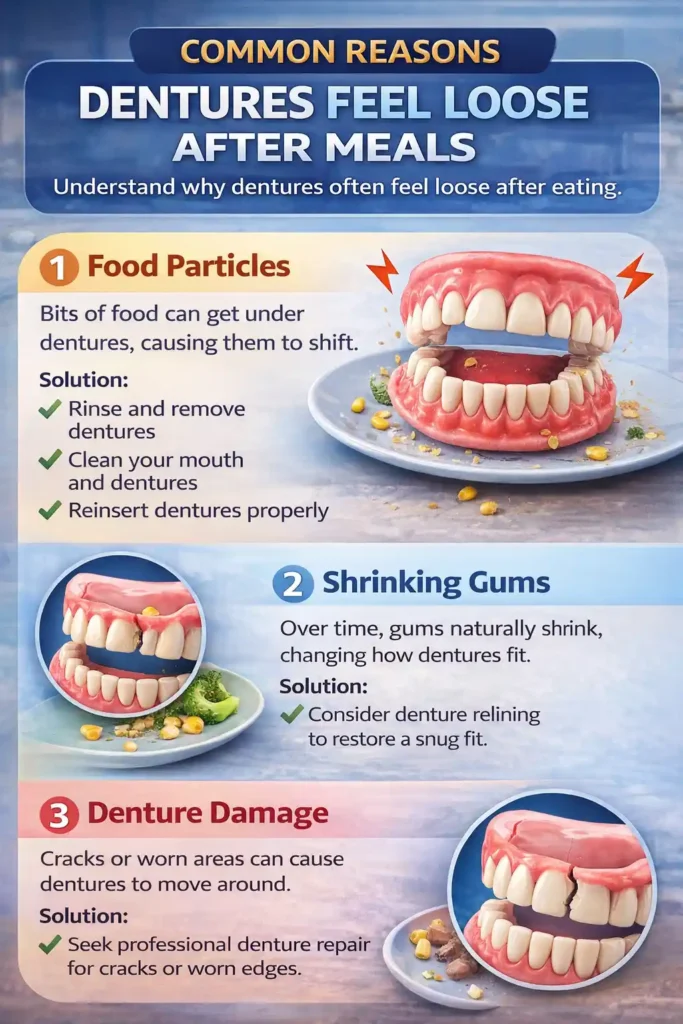
Understanding the cause helps determine the right solution.
1️⃣ Food Particles Under the Dentures
Small bits of food can get trapped between your dentures and gums, affecting the fit.
What to do:
- Remove and rinse your dentures
- Clean your mouth thoroughly
- Reinsert the dentures properly
2️⃣ Natural Changes in Your Gums
Over time, your gums and jawbone naturally shrink, which can make dentures feel loose.
This is one of the most common reasons patients need adjustments.
👉 Learn more in our guide on How to Tell If Your Dentures Need Relining Instead of Repair.
3️⃣ Worn or Damaged Dentures
Cracks, worn edges, or weakened materials can cause dentures to shift while chewing.
Signs include:
- Slipping during meals
- Difficulty biting food
- Clicking sounds
👉 If you notice damage, read What Happens If You Ignore a Cracked Denture to understand the risks.
When Loose Dentures Become a Problem
Occasional movement is normal, but frequent looseness should not be ignored.
You should seek professional help if:
- Dentures move while speaking
- Eating becomes uncomfortable
- Sore spots develop on your gums
- Dentures fall out easily
These symptoms often indicate the need for relining or repair.
How Professionals Fix Loose Dentures
The right solution depends on the cause.
✔️ Denture Relining
Restores the fit when gums have changed.
✔️ Denture Adjustment
Corrects minor alignment or pressure issues.
✔️ Denture Repair
Fixes cracks, breaks, or structural damage.
👉 Not sure how long dentures typically last? Check How Long Dentures Typically Last Before Repair Is Needed.
Avoid Temporary DIY Fixes
Many people try home solutions, but these can make the problem worse.
Avoid:
- Using glue or adhesives as a permanent fix
- Filing or reshaping dentures yourself
- Ignoring repeated looseness
👉 See why DIY fixes are risky in Can Super Glue Fix Dentures?
When to Visit a Professional in St. Louis
If your dentures feel loose after eating regularly, it’s best to have them checked by a professional offering denture repair in St. Louis.
Early treatment can:
- Restore proper fit
- Improve chewing comfort
- Prevent further damage
- Extend denture lifespan
Final Thoughts
Loose dentures after eating are common, but they shouldn’t become a daily problem. In most cases, a simple adjustment or relining can restore comfort and confidence.
Taking action early helps avoid bigger repairs and keeps your dentures functioning properly.
FAQs
Is it normal for dentures to feel loose after eating?
Occasional looseness can happen, but frequent slipping usually means the dentures need adjustment or relining.
Can food make dentures loose temporarily?
Yes, food particles trapped under dentures can affect the fit until they are cleaned.
How often do dentures need relining?
Most dentures require relining every 1 to 2 years, depending on gum changes.
Should I use adhesive if dentures feel loose?
Adhesive can help temporarily, but persistent looseness should be evaluated by a professional.