
Many denture wearers wonder how soon they can return to normal eating after getting their dentures repaired. Whether your dentures were cracked, a tooth fell out, or the base needed adjustment, denture repair can restore their function quickly.
However, it is important to give your mouth a little time to adjust after the repair. Understanding what to expect after denture repair can help you avoid discomfort and prevent further damage.
What Happens During Denture Repair?
When dentures are repaired, dental technicians restore their structure by fixing cracks, replacing missing teeth, or reinforcing the denture base.
This process ensures that:
- The dentures fit properly again
- Chewing pressure is evenly distributed
- The denture structure becomes stable
If you’re unsure when denture repair is necessary, you can read How Long Dentures Typically Last Before Repair Is Needed.
When You Can Start Eating Again
In most cases, you can begin eating with repaired dentures shortly after receiving them. However, it is recommended to start with soft foods to allow your mouth to adjust.
Your gums and jaw may need a short adjustment period, especially if the denture fit has changed after repair.
Starting slowly helps prevent unnecessary pressure on the repaired area.
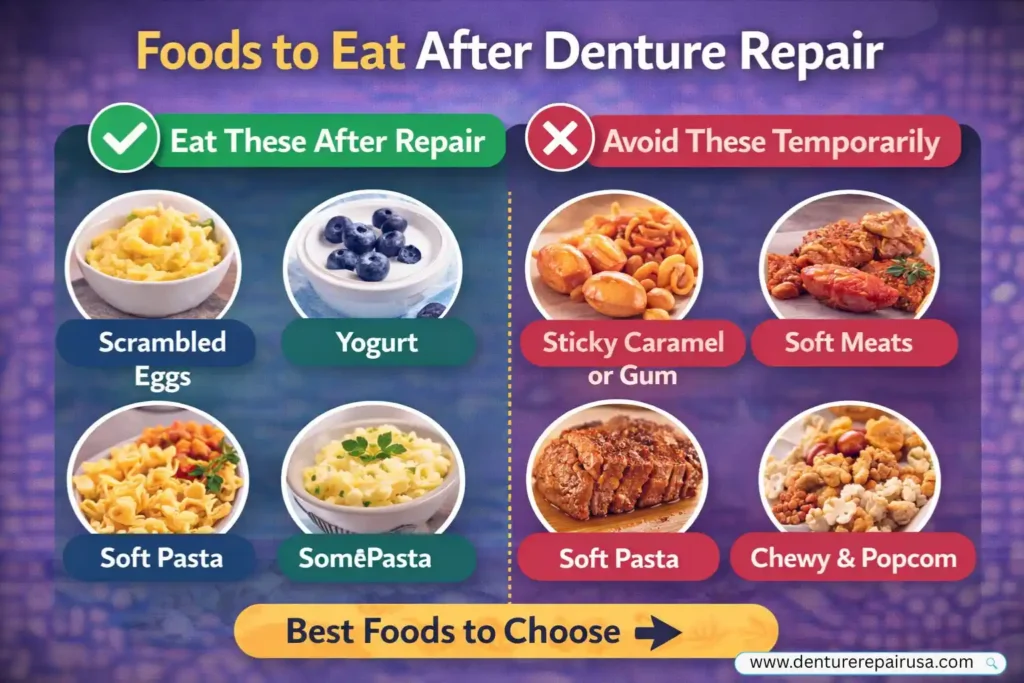
Best Foods to Eat After Denture Repair
During the first few days after denture repair, soft foods are the safest option.
Examples include:
- Scrambled eggs
- Yogurt
- Mashed potatoes
- Soft pasta
- Soup
These foods require minimal chewing and reduce stress on your dentures while you adjust to the repair.
Foods You Should Avoid Temporarily
Hard or sticky foods can put excessive pressure on recently repaired dentures.
Try to avoid:
- Hard candies
- Sticky caramel or gum
- Tough meats
- Crunchy foods like nuts or popcorn
Eating these foods too soon may damage the repaired area or cause discomfort.
If you want to understand how denture damage can affect chewing and jaw alignment, read How Denture Damage Affects Your Bite and Jaw.
Signs Your Dentures Need Further Adjustment
After denture repair, you should monitor how your dentures feel while eating and speaking.
Contact a denture repair specialist if you notice:
- Pain while chewing
- Dentures shifting or slipping
- Gum irritation
- Difficulty biting food
Regular checkups can prevent recurring problems. Learn more in How Often Should Dentures Be Checked or Adjusted.
Tips for Comfortable Eating With Dentures
To make eating easier after denture repair:
- Cut food into smaller pieces
- Chew slowly and evenly on both sides
- Avoid extremely hot foods initially
- Keep dentures clean and properly maintained
These simple habits can help extend the life of your dentures and reduce the need for frequent repairs.
If you experience sudden denture damage in the future, our guide What to Do If Your Dentures Break Suddenly explains the immediate steps to take.
Conclusion
After denture repair, most people can return to normal eating fairly quickly. Starting with soft foods and gradually returning to your regular diet helps ensure comfort and protects the repaired dentures.
Proper care and timely repairs will keep your dentures functioning well and allow you to eat comfortably for years.