
Dentures need relining instead of repair when they feel loose, uncomfortable, or no longer fit properly, but are not cracked or broken. Relining improves the fit, while repair fixes physical damage like cracks or missing teeth.
Understanding the Difference: Relining vs Repair
Many people confuse these two services, but they solve very different problems:
- Denture Repair → Fixes damage (cracks, breaks, missing teeth)
- Denture Relining → Adjusts the fit to match your gums
If your dentures are intact but uncomfortable, relining is usually the right solution.
👉 Related: How Denture Damage Affects Your Bite and Jaw
👉 Also read: What Causes Dentures to Crack or Break?
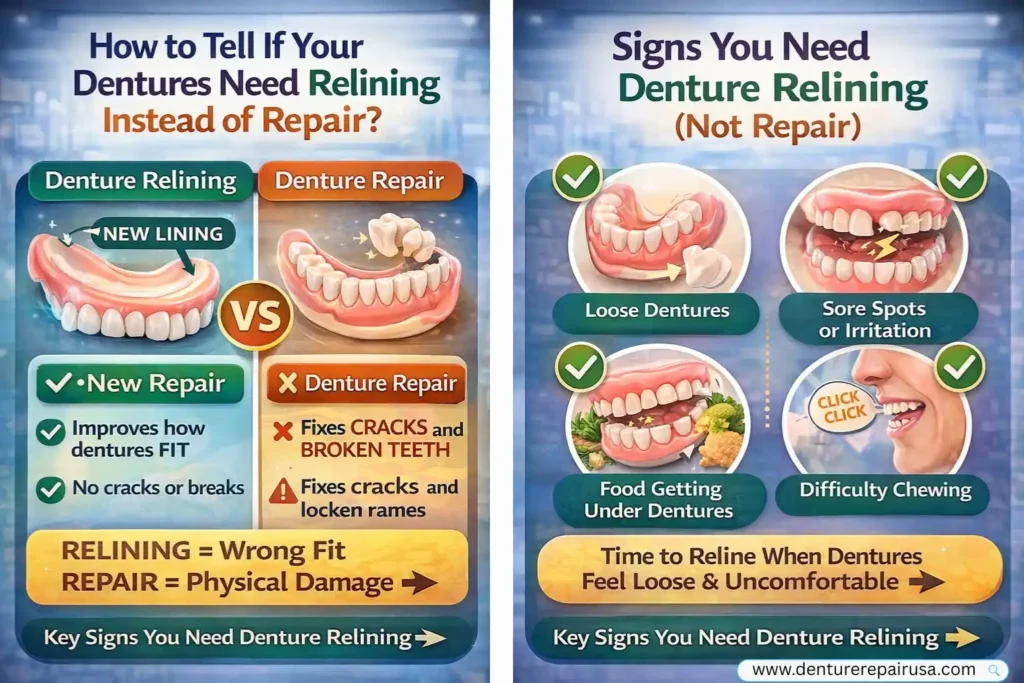
Signs You Need Denture Relining (Not Repair)
1. Loose Dentures
If your dentures slip while talking or eating, your gums may have changed shape over time.
2. Sore Spots or Irritation
Poor fit can cause pressure points and discomfort.
3. Difficulty Chewing
Loose dentures reduce bite strength and stability.
4. Food Getting Under Dentures
This is a common sign that your dentures no longer fit properly.
5. Clicking Sounds While Speaking
Movement in dentures often causes noticeable sounds.
👉 Related: Signs Your Dentures Need Repair (Before They Break)
Signs You Need Denture Repair Instead
Relining won’t help if there is actual damage. You need repair if you notice:
- Cracks or fractures
- Broken denture base
- Missing or chipped teeth
- Completely snapped dentures
👉 Read more: What to Do If a Denture Tooth Falls Out
👉 Also: Can Super Glue Fix Dentures?
Why Dentures Become Loose Over Time
Your mouth naturally changes:
- Bone shrinkage (jaw resorption)
- Gum tissue changes
- Weight loss or aging
This is why relining is often needed every few years.
👉 Related: How Often Should Dentures Be Checked or Adjusted?
How Denture Relining Works
The process is simple and effective:
- Dentist reshapes the inner surface
- New material is added for better fit
- Dentures are adjusted to match your gums
In many cases, this can be done quickly even same day.
Relining vs Replacement: When to Upgrade
Relining may not be enough if:
- Dentures are very old
- Multiple repairs have been done
- Fit issues keep returning
👉 Related: Questions to Ask Before Choosing a Denture Repair Lab
Cost Difference: Relining vs Repair
- Relining → Usually more affordable
- Repair → Cost depends on damage severity
👉 Also read: How to Save Money on Denture Repair
When to See a Professional
Don’t wait too long if your dentures feel off.
Delaying treatment can lead to:
- Gum irritation
- Difficulty eating
- Jaw problems
👉 Related: Emergency Denture Repair: What to Do When Dentures Break
Conclusion
Knowing whether you need denture relining or repair can save you time, money, and discomfort.
- Choose relining for fit issues
- Choose repair for damage
If you’re unsure, a quick professional check can help you make the right decision and keep your dentures comfortable and functional.
FAQ
How do I know if my dentures need relining?
If your dentures feel loose, cause discomfort, or don’t fit properly, you likely need relining.
Can relining fix broken dentures?
No, relining only improves fit. Broken dentures require repair.
How often should dentures be relined?
Most dentures need relining every 1–2 years, depending on gum changes.
Is denture relining expensive?
Relining is usually more affordable than full repairs or replacements.